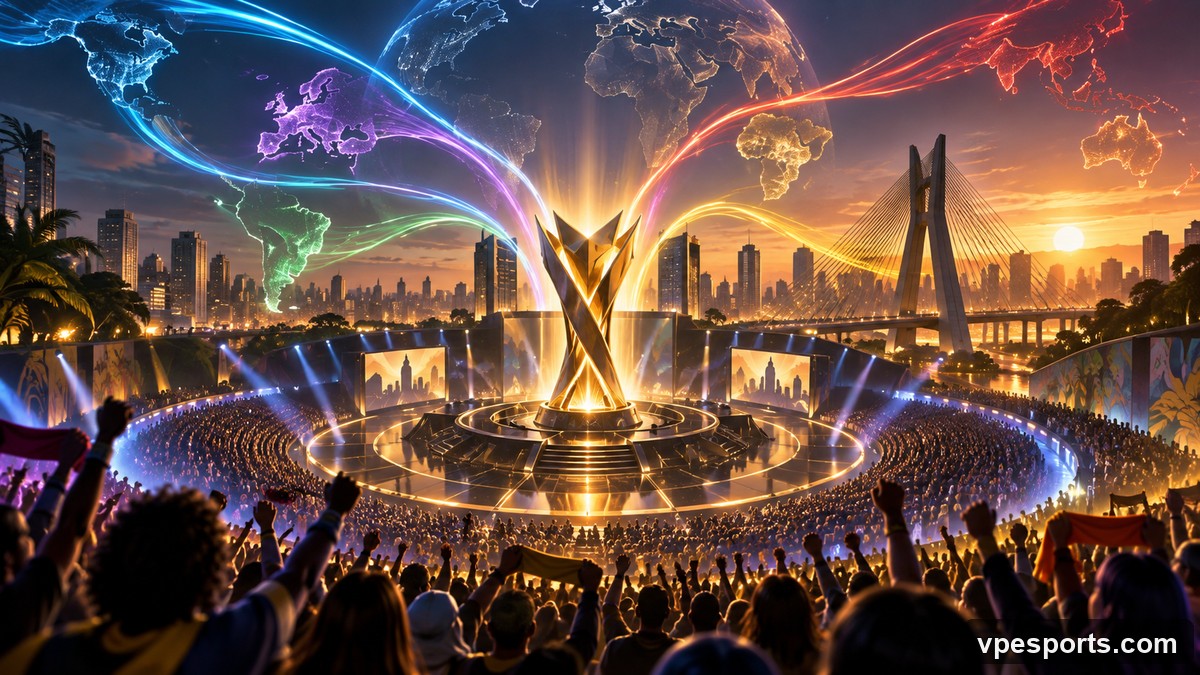
The 2026 Game Changers Championship will bring a 10-team field to Sao Paulo from October 22 through November 1. The published structure uses double elimination, with best-of-three matches through most of the bracket and best-of-five series for the lower-bracket final and grand final. Nine direct participants are identifiable after the regional competitions, while the fourth Americas place remains tied to the Last Chance Qualifier. This overview is about the global format and allocation, not a repeat of any one regional final.
EMEA holds three places in the field through G2 Gozen, Gentle Mates and SK Nebula. Pacific sends Gen.G GC and FENNEL Female, and China sends Nova Esports GC. The three direct Americas representatives are Team Liquid Brazil, Shopify Rebellion Gold and KRU Blaze. Those names account for nine positions. The tenth belongs to the winner of the Americas LCQ, so describing the entire lineup as final before that competition would remove an important qualification condition.
The regional allocation works differently across the tournament. EMEA, Pacific and China determine their places through their own regional competition structures. The Americas divides its direct representation among North America, Brazil and Latin America, then adds a shared LCQ place contested by regional runners-up. That route gives the final slot a separate competitive process. It should not be assigned to a team based on reputation, prior results or a coach’s expectation.
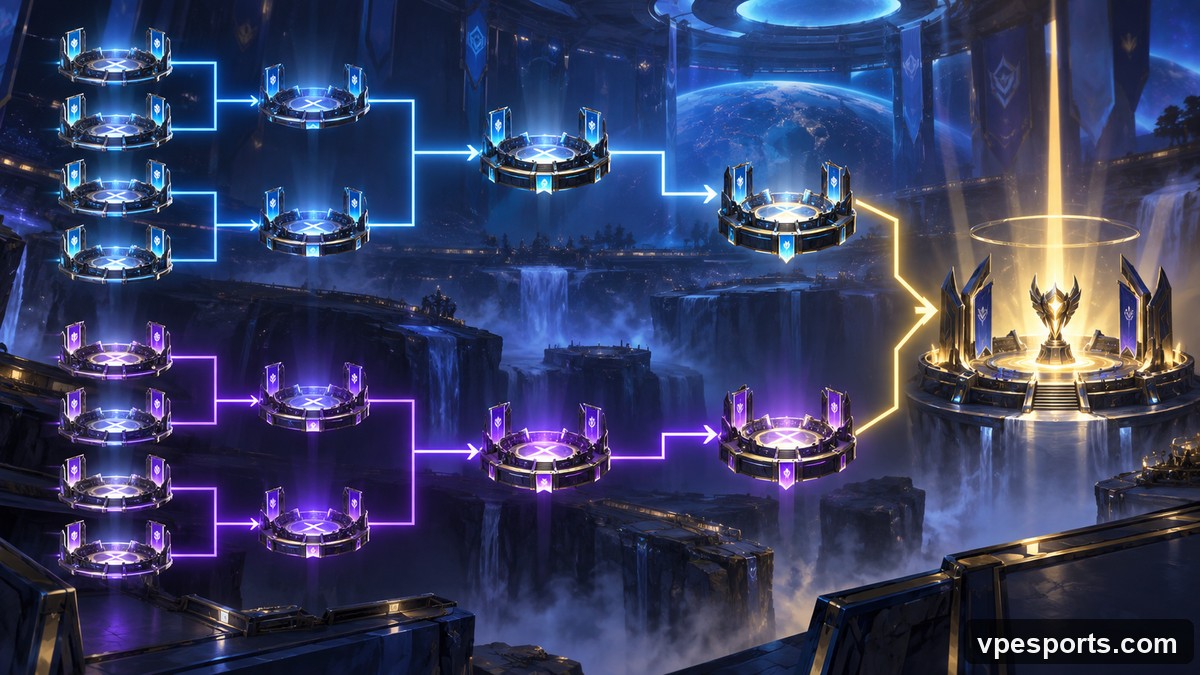
How the São Paulo bracket will work
Double elimination gives a team a lower-bracket route after its first loss, provided it has not already lost there. Most matches will be best-of-three, which requires two map wins to advance. The lower-bracket final and grand final expand to best-of-five, requiring three map wins. That progression increases the length of the last elimination test and the title match without changing the basic two-loss structure of the bracket.
The format also explains why regional seeding still matters even though every qualified team enters the same global event. Seeds can influence initial placement and the sequence of potential opponents, but they do not award a win before play begins. Gen.G’s Pacific title, FENNEL’s runner-up position and Nova’s China qualification are separate regional results already covered on their own terms. In this article, their relevance is limited to which positions in the 10-team global field they occupy.
Sao Paulo provides a defined time window of October 22 to November 1. That schedule gives teams several weeks after the September regional conclusions, but the source does not publish each matchup or start time in the format overview. It also did not list a confirmed prize pool at publication. Those omissions should remain omissions. Filling them with a previous season’s figures or an unofficial bracket would turn a useful structural guide into an inaccurate event announcement.
The broadcast plan is more settled at a general level. Riot’s official Twitch and YouTube channels are listed as viewing options, with co-streams expected in additional languages. That tells readers where official coverage will live without promising a specific co-streamer or language lineup. Exact daily schedules and approved co-streamers can be added only after organizers publish them. The present value is knowing the event dates, field size, elimination system and route for the unresolved place.
The one Championship place still open
The remaining Americas LCQ berth is the only field position that should still be labeled undecided in this format snapshot. The competition brings together second-place teams from the Americas subregions and awards one Championship place. Until that event is played, no participant can be described as the tenth qualified team. This is a concrete next step rather than a vague promise of more qualification news.
Once the LCQ winner is known, the field can be presented as 10 named teams. Even then, qualification status will not settle the tournament bracket results. The double-elimination format leaves every participant with a route after one loss and ends a run only after the second. Readers can therefore distinguish three stages of certainty: nine teams are already known, one berth awaits the LCQ, and every Sao Paulo match result remains in the future.
The Game Changers Championship has a confirmed 10-team, double-elimination structure and an October 22 start in Sao Paulo. Nine participants are known, while the Americas LCQ will decide the final place. The format is settled enough to explain clearly without inventing the prize pool, daily schedule or eventual winner.