
Champions Shanghai begins September 24 with 16 teams and ends October 18 with the 2026 world champion. The official format divides the event into a Group Stage and playoffs: four regional mixed groups reduce the field to eight, then a double-elimination bracket decides the title. Every team receives a route after an initial loss, but a second defeat ends its run. This guide covers the event structure and viewing features rather than repeating earlier stories about merchandise, absent players or one team’s preparation.
The Group Stage runs through October 4. Each of the four groups contains one representative from Americas, CN, EMEA and Pacific, preventing any group from being composed entirely of one regional league. All group matches are best-of-three. The double-elimination principle applies inside each group: a team can recover after one loss, while a second loss eliminates it. Two teams from each group advance, producing the eight-team playoff field.
That structure makes the opening match important without making it final. Winners move closer to one of the two advancing places, while losing teams still receive an elimination route. The format rewards recovery but does not provide unlimited chances. It also ensures that cross-regional matches begin before the playoff bracket, giving every group the same regional composition even though specific opponents and paths differ.

How the two stages lead to the final
After the Group Stage ends, October 5 and October 6 are dark days. Playoffs begin October 7 and continue through October 18 under double elimination. One defeat moves a team to the lower side; another sends it out of the tournament. The scheduled run includes playoff match days through October 11, followed by another break before the final weekend.
Competition resumes October 16, the lower-bracket final follows October 17, and the grand final closes the event October 18. That sequence gives the upper-bracket winner a direct route to the title match while the remaining lower-bracket teams must survive an additional elimination series. The official guide confirms the dates and loss rules, but it does not identify a winner in advance. Regional seeding and recent form do not alter the elimination conditions once play begins.
Shanghai is hosting Champions for the first time in China. The 16 participants arrive from four circuits, but the event awards one global title rather than separate regional trophies. That distinction matters because recent Stage results explain qualification and seeding, not the final world order. A team that dominated its regional run can still be removed after two losses, while a team sent to an elimination match can continue if it wins.
The official schedule also includes deliberate no-match periods. September 28 is a dark day during groups. October 5 and October 6 separate groups from playoffs, and October 12 through October 15 divide the main playoff block from finals weekend. These breaks are part of the published calendar, so an empty match day should not be interpreted as a cancellation.
Drops, Pick’Ems and live predictions
Riot is connecting the broadcast to several viewer systems. Watching eligible coverage can award an exclusive Title through Drops. Pick’Ems lets viewers lock predictions and compare their reads, while Shotcall adds live Twitch predictions for maps, rounds and clutch moments. These systems are participation features; they do not influence the competitive bracket or an official match result.
The tournament will also name an MVP after the final. Riot says talent, co-streamers and media will decide the recipient based on impact, consistency and performance under pressure. Because the choice occurs after the competition, no player should be presented as the confirmed MVP before October 18. Strong group statistics can support discussion, but they are not the award itself.
Official VCT channels remain the reliable place for the live broadcast and schedule updates. Readers should check the event pages for local start times because the broad guide supplies the stage calendar rather than one universal clock for every audience. The fixed information is the September 24 opening, the October 4 end of groups, the October 7 playoff start and the October 18 grand final.
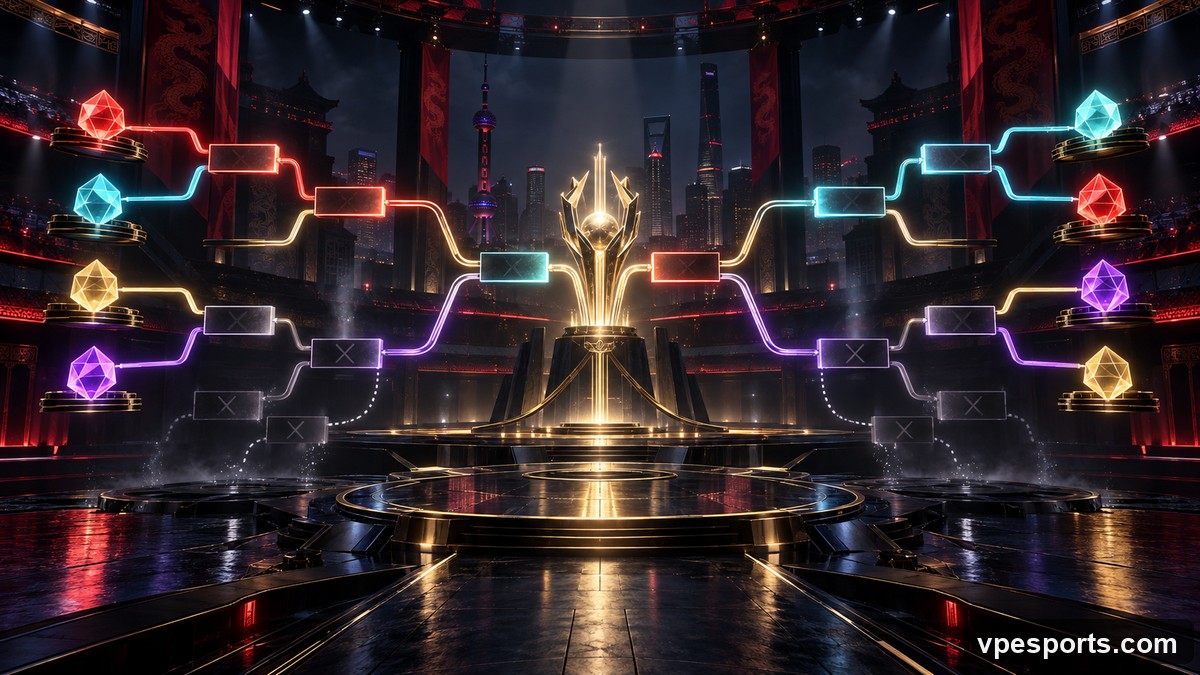
Champions Shanghai uses four regional mixed groups and an eight-team double-elimination playoff to move from 16 entrants to one champion. The published calendar separates each stage with defined dark days and ends with the lower final and grand final on consecutive dates. Drops, Pick’Ems, Shotcall and the post-final MVP vote add viewing context without changing the bracket.